What EU261 is
Regulation (EC) No 261/2004, usually called EU261, sets minimum rights for air passengers in Europe. Unlike the U.S. refund rules, it can entitle you to a fixed amount of compensation on top of care and a refund or rebooking when things go wrong. It is one of the most widely discussed passenger regimes in the world, and many travelers never claim what they are owed simply because they do not know the flight was covered.
The regulation is about the operating air carrier and the journey you held a confirmed reservation for. It is not a travel-insurance policy, and it does not pay you because a trip felt stressful. The triggers are specific: denied boarding, cancellation, and long delay on arrival. Everything else in this article is a way to tell whether your flight is one of those cases.
Which flights are covered
According to the European Commission's Your Europe guide, the rules apply to flights within the EU on any airline, flights departing from the EU to a non-EU country on any airline, and flights arriving in the EU from outside the EU when they are operated by an EU airline. The same rules also apply to flights to and from Iceland, Norway, and Switzerland. A flight from New York to Paris on a European airline is covered; the same route on a U.S. airline generally is not, but the return from Paris to New York is covered on either.
There is one more condition: the rules do not apply if you have already received benefits for the same problem under the law of a non-EU country. The United Kingdom has kept its own version of the regulation since leaving the EU, administered by the UK Civil Aviation Authority, with amounts set in pounds. If your disruption is on a UK itinerary, read the CAA page rather than assuming the euro figures below still apply in sterling.
Separate tickets are separate journeys
Coverage follows the booking. A single ticket from a U.S. city through an EU hub to a second EU city can be one journey for the final arrival time. Two tickets you bought yourself, even if the second flight leaves from the same airport, are usually two contracts. Missing the second because the first was late is the problem described in how to judge a flight connection, and EU261 may not stitch those tickets together for you.
How much compensation
The amount depends on the distance of the flight, not the price you paid. The Your Europe guide lists 250 euros for flights of 1,500 km or less, 400 euros for flights of more than 1,500 km within the EU and for all other flights between 1,500 and 3,500 km, and 600 euros for flights of more than 3,500 km. Distance is measured for the whole journey to your final destination when you are on a single booking. The airline can reduce the amount in some long-delay rerouting cases described in the regulation; the headline bands are the starting point, not a promise that every claim pays the top figure.
These amounts apply to denied boarding, to cancellations notified less than 14 days before departure, and to delays where you arrive at your final destination three hours or more late. The three-hour arrival delay rule comes from the Court of Justice of the European Union's rulings, starting with the Sturgeon case in 2009, which treated long delays like cancellations for compensation purposes. Arrival is commonly taken as the moment the aircraft door opens at the final destination on that booking, so note the time if you can.
Extraordinary circumstances
Compensation is not due if the airline can prove the cancellation or delay was caused by extraordinary circumstances that could not have been avoided even if all reasonable measures had been taken. Severe weather, air traffic control restrictions, and security threats are typical examples. Routine technical problems discovered during normal maintenance usually are not, although courts have considered many specific cases. A one-line email that says 'operational reasons' is not the same as evidence.
The burden is on the airline. The Your Europe guide notes that the carrier has to prove its case with evidence such as logbook extracts or incident reports. If an airline simply says the delay was out of its control, you can ask it to explain the cause. You do not have to accept the first refusal as the end of the file, and you also do not have to invent a cause the airline has not stated.
Care and rerouting are separate rights
Even when compensation is not payable, you keep the right to care. During long waits, the airline must provide meals and refreshments in proportion to the waiting time, a means of communication, and a hotel and transport when an overnight stay becomes necessary. When a flight is cancelled, you can choose between a refund, rerouting at the earliest opportunity, or rerouting at a later date that suits you. Those choices are in the regulation itself, not a goodwill gesture.
Keep receipts for reasonable expenses if the airline does not provide care on the spot. A sandwich and a coffee are easier to justify than a long tasting menu. Airlines are expected to reimburse reasonable costs. Photograph the receipt before it fades, and write the flight number on it. U.S. travelers sometimes confuse this care duty with the American refund rules. They are different systems. When a U.S. airline owes a refund covers the cash-back side for flights that touch the United States, and it does not add a fixed euro payment on top.
Three illustrations
A flight from Lisbon to Berlin, a distance in the middle band, arrives four hours late because the crew was out of hours after an earlier delay. The flight departed the EU, the arrival delay is over three hours, and crew scheduling is normally within the airline's control, so the 400 euro band is the one to read. That is an illustration of how the published factors line up, not a prediction of how a particular airline will answer.
A flight from Chicago to Rome on a U.S. airline is cancelled the day before departure. The flight arrives in the EU but is operated by a non-EU airline, so EU261 generally does not apply. U.S. refund rules and the airline's own customer service plan are the place to look instead. The return from Rome, departing the EU, is a different analysis.
A flight from Madrid to Paris is delayed five hours by an air traffic control strike. You are owed care during the wait, but compensation is unlikely because strikes by air traffic controllers are usually treated as extraordinary circumstances. Every case turns on its facts, so these sketches are a way to practice reading the rule, not guarantees.
How to claim
Start with the airline. Most have an online form for EU261 claims. Include your booking reference, flight number, date, the scheduled and actual arrival times, and a clear request for compensation under Regulation 261/2004. If the airline refuses or does not reply, each EU country has a national enforcement body that handles passenger complaints, and alternative dispute resolution schemes are listed from the Your Europe pages. Claim companies can pursue the case for you in exchange for a share of the payout. Whether that is worth it depends on how much time you want to spend; many straightforward claims are filed directly.
Run the rest of your pre-trip checks the way you would for any booking. The travel news checklist before you pay is the habit that keeps documents and fare rules in one folder, which is also the folder you will want if you later have to prove what you bought. The journal collects the other planning notes on this site if you are still choosing the trip rather than filing a claim.
What to keep from the day itself
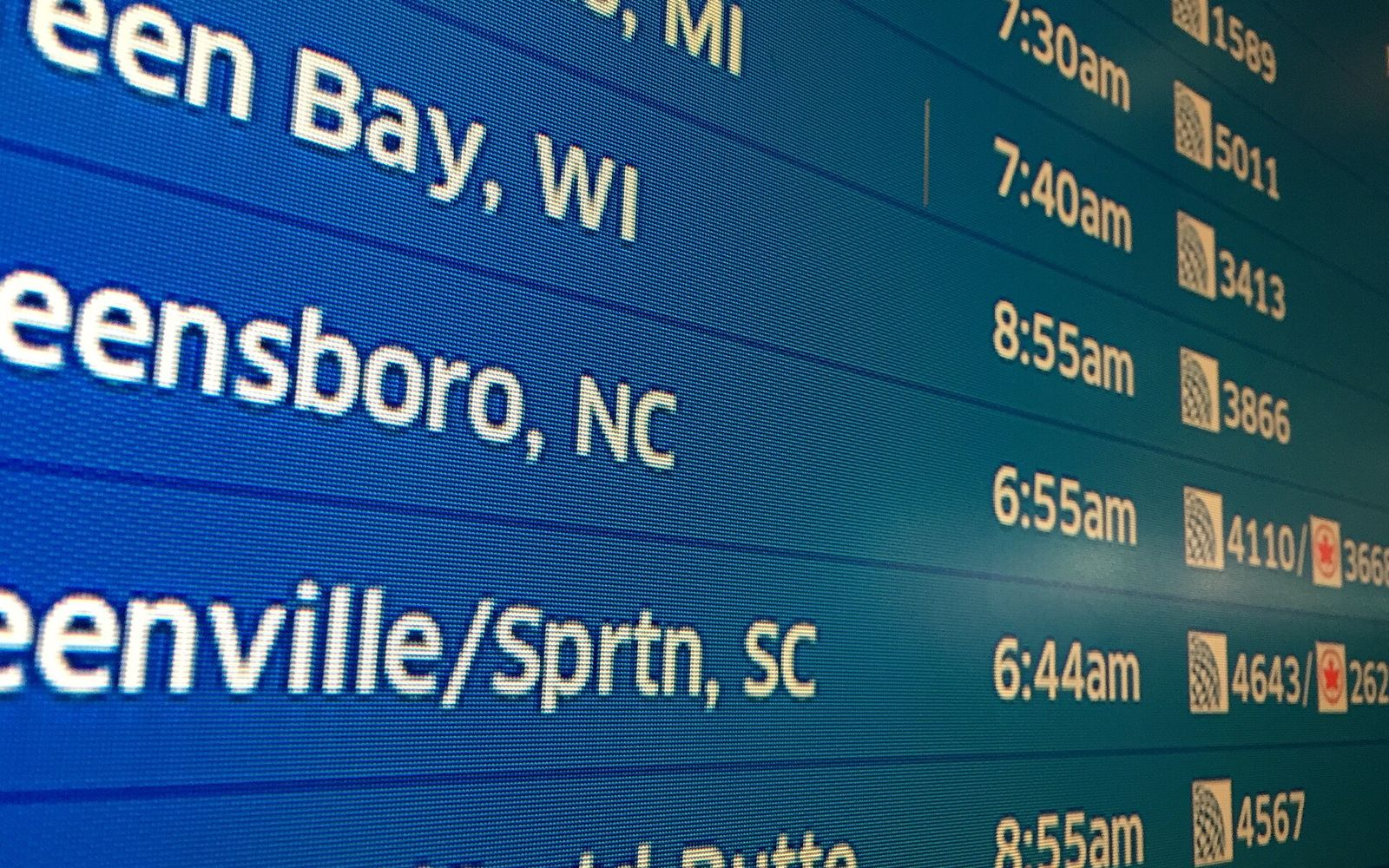
Photograph the departure board, save emails and app notifications, and keep boarding passes until the claim is closed. A simple record of what happened and when makes any claim, EU261 or otherwise, easier to resolve. If you were rerouted, keep both boarding passes. The second one shows the arrival that the three-hour test is measured against.
Sources
This is an educational summary of publicly described passenger rights, not legal advice. Individual claims depend on the flight, the airline, and the facts. Check the European Commission's Your Europe guide and, for UK flights, the UK Civil Aviation Authority before you file.